The aesthetic I keep returning to and what it says about me
I've stopped fighting the fact that my aesthetic is essentially 'someone who has too many books and drinks a lot of tea in naturally lit rooms.' It has a vintage, unhurried quality and I'm keeping it.
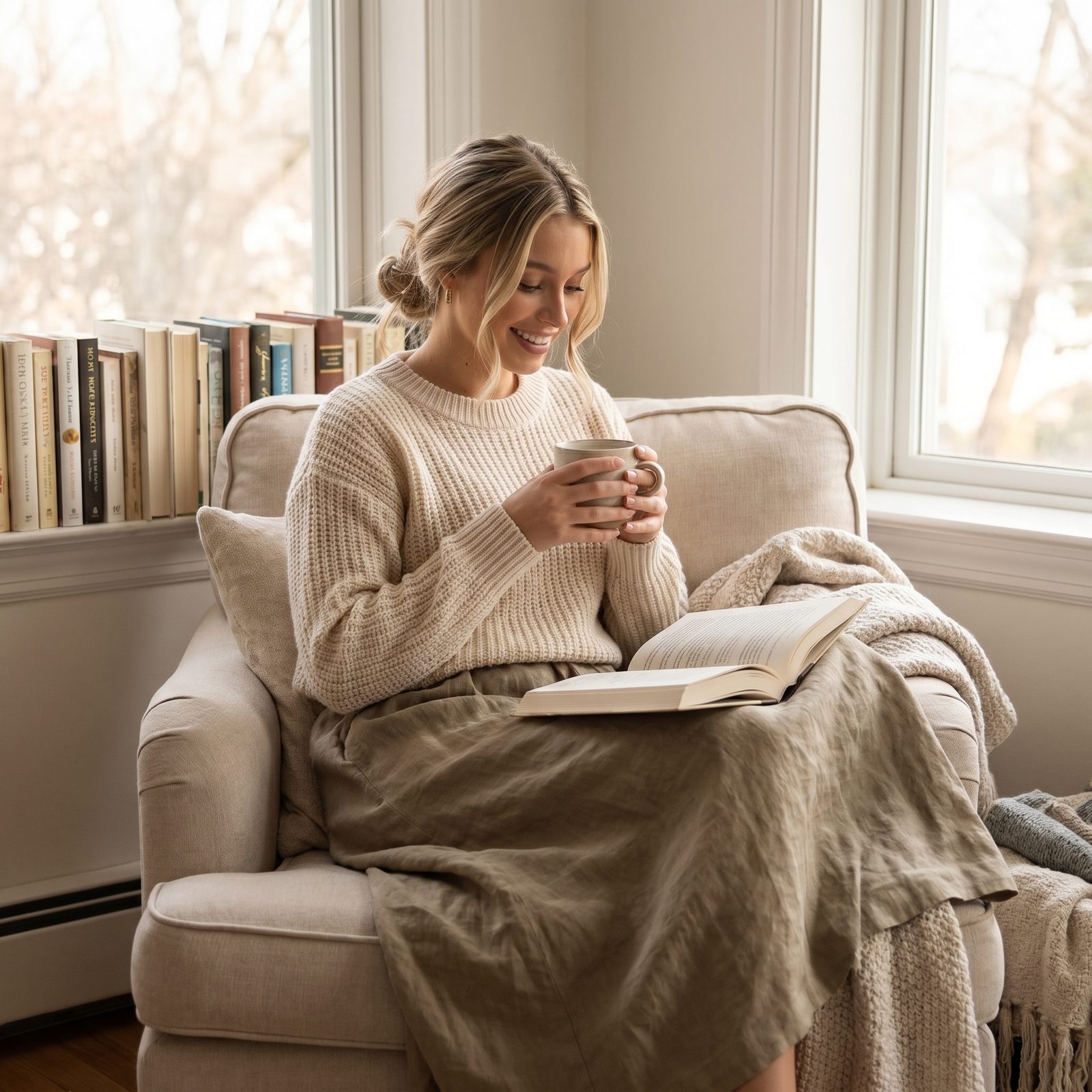
There's a bookshop about ten minutes from my flat that I've been going to since I first moved here. It's the kind of place that doesn't feel like it's trying to be anything, low ceilings, wooden shelves that bow slightly under the weight, a cat that belongs to no one and everyone. Last week I went on a Thursday afternoon when the light was already beginning to dim by half past two, and I stood in the poetry section in my cream turtleneck for what must have been forty-five minutes just breathing the place in. The particular smell of it, old paper and something faintly like woodsmoke, is one I'd recognise anywhere. Time moves differently in there. Slower. Kinder.
I came home and looked at the photos on my phone and thought: yes. That's it. That's the aesthetic I keep returning to. Pale colours. Natural light. Things that have been handled lovingly. Rooms where a person could comfortably be quiet for a long afternoon and not feel like they were missing something.
An aesthetic is a kind of self-portrait
I've been thinking about this a lot lately, what it means that we're drawn to the things we're drawn to. It's easy to dismiss aesthetic preferences as shallow, as if caring about how a space looks or what you put on your body is vanity rather than substance. But I think that misses something. The images we return to, the textures we keep reaching for, the rooms that make us exhale, they say something true about who we are and, maybe more importantly, who we want to feel like.
My aesthetic has always had a kind of unhurried, secondhand quality to it. Not shabby, nothing grimy or neglected. More like lived-in. Books with cracked spines. Mugs that have been used enough to belong somewhere. Linen that has wrinkled naturally. Light that comes in sideways rather than harsh and overhead. The visual language of a life that has settled.
I used to feel slightly apologetic about it, especially online where everything trends either toward stark minimalism or very saturated maximalism. My palette is beige and cream and dark green and the particular dusty rose you get on old book covers. It's not a trending aesthetic in any of the ways that word currently means. But it's mine, and I've decided to own that.
The apology used to creep in especially when I'd look at creators whose content had a very distinct, very contemporary look, the ones who understood algorithm-friendly visual formats deeply and deployed them with precision. There was always a small, questioning voice wondering whether my particular quietness was a limitation rather than a choice. I've mostly silenced that voice now. Not because I've convinced myself my aesthetic is superior, but because I've realised that the question of whether something is enough is the wrong question. The right question is whether it's true. And this is true.
Why the 90s fine-girl energy resonates
Someone in a comment a few weeks back used the phrase "90s fine look" and I went down a small rabbit hole because it described something I'd never been able to name. The references that came up, a kind of quiet ease, quality over trendiness, an unfussy confidence that didn't need to announce itself, felt genuinely familiar. Not the fashion specifically, but the energy underneath it. The sense that style is something you inhabit rather than perform.
There's a version of that aesthetic that I find deeply appealing precisely because it refuses to try too hard. A good cream cardigan worn for years until it goes slightly soft at the elbows. A white mug with a slight chip in the handle that nobody's thrown away because it still works perfectly. Hair that isn't quite done but is arranged with enough intention to feel deliberate. The ease of someone who knows their own taste and doesn't require external validation to feel sure of it.
That quality, ease plus self-knowledge, is something I'm still learning. But the aesthetic itself serves as a kind of reminder that it's possible. You can just decide what you like and live inside it without constantly auditing whether it's enough.
An aesthetic isn't a look you maintain. It's a feeling you keep returning to, the sensory version of who you are when you're not trying to be anything else.
The specific things that carry it
My wardrobe is mostly neutral, a lot of cream and oatmeal and deep olive and one excellent rust-coloured jumper I've had since I was twenty-two. When I get dressed in the morning I'm not really making a statement. I'm putting on a kind of comfort, a familiar texture. The cream turtleneck I wore to the bookshop is probably fifteen pounds on a good day and I've worn it more times than I can count. It photographs beautifully because there's nothing complicated about it. Light just lands on it cleanly.
My flat is small, as I've probably mentioned too many times in this diary. But I've arranged it to feel like itself rather than like an aspirational mood board. There are books on every surface because that's just the situation I'm in. There's a little lamp in the corner that throws a circle of warm light and I've made it my personal mission to only photograph by that lamp when possible. There's a print of an old map on the wall and a cream linen throw that gets used constantly and looks worse for it, which somehow makes me like it more.
None of this is expensive. Some of it is from charity shops and some from markets and some of it just turned up and refused to leave. But it all has a coherence that took me a while to recognise as intentional, even though it was assembled slowly and without a plan. It turns out that when you just consistently choose the things that make you feel like yourself, a kind of visual identity emerges without you having to engineer it.
I think about this when I see people agonising over their “aesthetic era” online, the carefully constructed pivot from one visual identity to another, the announcement posts about new directions. I understand the impulse to consciously curate, and sometimes it produces beautiful results. But there's another way, which is the one I seem to have fallen into: just choosing, again and again, the things that feel true. The charity shop mug. The old cardigan. The little lamp. Over time you look around and realise you've built something coherent without trying to, and somehow that version is more yours than any planned version could have been.
How it shows up in content
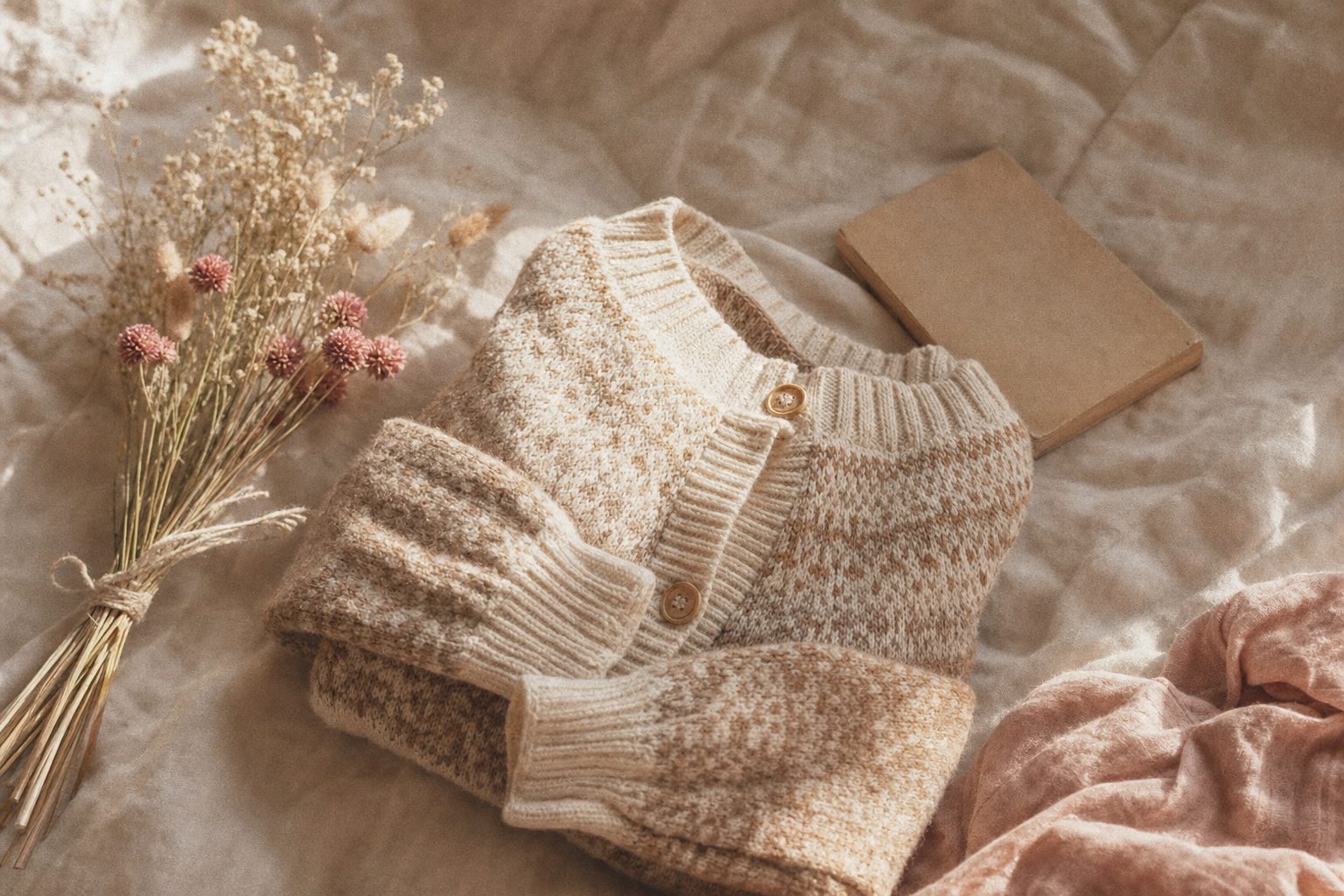
When I started making videos and writing here, I didn't initially think of my aesthetic as a conscious choice for the content. I just filmed and wrote in the same visual world I already lived in, because I don't have any other world to film in. But gradually I started to understand that the visual language of my posts, the warm light, the pale palette, the texture of things, wasn't incidental. It was communicating something before a single word was read or heard.
There's a consistency to it that I think people feel even if they don't consciously notice it. You don't have to immediately know who made something for there to be a recognisable quality that ties things together. That quality, for me, comes directly from the aesthetic I live inside, the same cream turtleneck, the same bookshop light, the same mug. The content is an extension of the actual life, not a version of the life that's been elevated or curated into something else.
That feels important to me. Unfamiliar doesn't mean wrong, I used to worry that my particular visual sensibility was too quiet, too analogue for an era of bright colours and fast cuts. But I've stopped worrying about that. The people who respond to it are responding to something genuine, and that seems like the right foundation for anything.
What consistently draws you is worth following
Here's what I've come to believe: an aesthetic isn't a trend you adopt or a vibe you perform for an audience. It's a form of self-knowledge. It's the accumulated answer to the question: what makes you feel like yourself? What makes you feel at ease? What quality of light do you want to live in?
If you find yourself returning to the same mood board again and again, the same corners of Pinterest, the same kind of room in every film that makes you sigh a little, that's not a shallow preference. That's information about who you are. It tells you something about the quality of life you're building toward, the kind of days you want to have, the feeling you want in your chest when you walk through your own front door.
I keep returning to the bookshop, to the cream turtleneck, to the lamp in the corner, to the particular smell of old paper and unhurried afternoons. I've stopped wondering whether I should be into something different, something more current or more remarkable. This is mine. It fits. That's enough.
There's a particular peace in that sentence. This is mine. Not aspirationally, not eventually, not after some future version of yourself has done sufficient work to deserve it. Now. The cream turtleneck on a February afternoon in the bookshop where time moves differently. This is the life, already. The aesthetic you keep returning to is a sign that it's already yours.
Pay attention to what consistently draws you. It's a map, not to someone else's ideal life, but to your own.