Turning my flat into a winter retreat (without a renovation budget)
December is the month I stop fighting home and start conspiring with it. Here's what that looks like in practice.
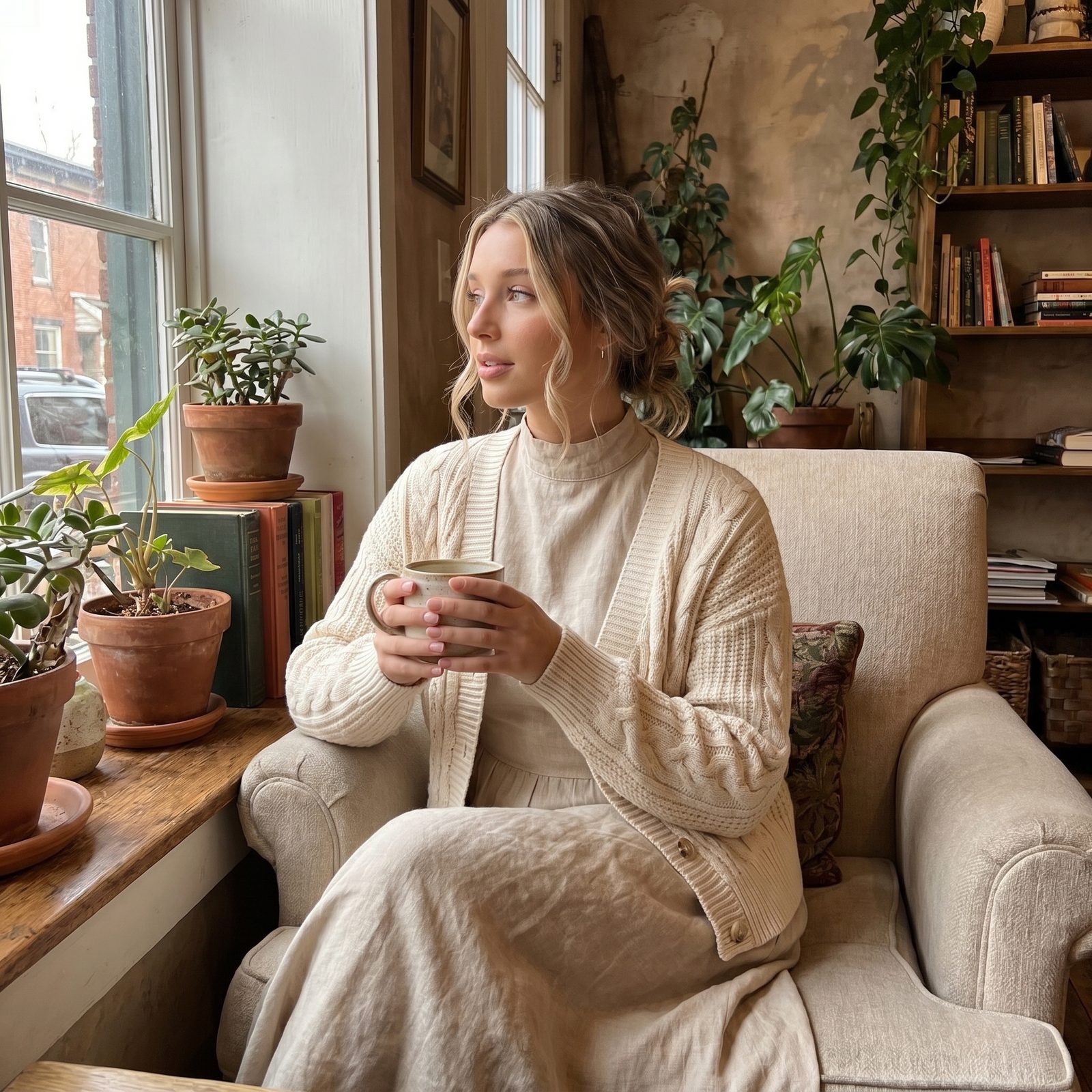
There is a version of my flat that exists only in December. It has the same furniture, the same layout, the same small kitchen and the radiator that ticks and the window that looks out onto the street below. But it feels entirely different. It smells different. The light is different. The quality of an evening spent inside it is different in a way I'd struggle to articulate precisely but can feel the moment I come through the door and something in my shoulders immediately, voluntarily drops.
I used to think this happened automatically, that December somehow just felt like December and home somehow just shifted into winter mode without much effort on my part. Then I looked at what I was actually doing differently and I realised it was a list of very specific, repeatable changes that I make every year, usually in the first week of the month, and that the comfort I feel isn't accidental. It's built. Deliberately and with pleasure.
This is what my December transformation looks like. No renovation budget required. Most of it costs almost nothing. All of it is about choosing comfort over aesthetics, making the flat feel right for the person actually living in it rather than right for an imagined observer.
The physical list: what actually changes
The first thing is the throws. I have two heavy ones, not decorative, not folded neatly in a basket for Instagram, but genuinely deployed, one on the sofa and one accessible from the bed, and they come out of the top shelf at the beginning of December and don't go back until late February. The weight of a proper throw is a sensory thing that no amount of fine blankets replicates. Something about the heaviness is the whole point.
Then the candles. I have a small candle that I buy every year, I've been buying the same kind for three years now, unbranded, from a local shop, and it smells like something warm and faintly smoky and particular to winter in a way that nothing else quite matches. I put it in the middle of the coffee table. Every evening it goes on. This sounds small. It's not small. The moment that scent fills the flat, which takes about four minutes, is the moment the space transforms from a place I live in into a place I've chosen to inhabit. There's a difference.
String lights. I get them down from the top shelf slightly sheepishly, because I am aware that string lights are both extremely cosy and extremely well-documented as a cosy choice, but I've made my peace with that. Mine go along the window ledge and around the bookshelf and the effect, when every other lamp is also on and the curtains are drawn at five in the afternoon, is exactly what I need it to be.
The heavy curtains go up. I have two pairs, lighter ones for spring and summer, heavier ones that I also retrieve from the top shelf in early December. The difference in a room's feel when there are proper curtains versus thin ones, on a dark winter evening, is remarkable. The thicker curtains hold the warmth in differently. They muffle the sound of the street differently. They make the inside feel more distinctly inside.
Scent as the most powerful change
If I had to choose only one thing from the transformation list, it would be the candle, and here's why: scent reaches a part of the brain that bypasses most of the usual cognitive processing. You don't evaluate a smell the way you evaluate a visual. You just respond to it, immediately and involuntarily. This means that when you create a consistent winter scent in a space, you're effectively conditioning yourself to associate that scent with warmth and safety and December comfort. Every time the candle goes on, the association activates. The body responds before the mind has even registered the smell.
I find this genuinely interesting because it means scent is doing more work than we usually give it credit for. It's not decorative. It's functional, it's creating an experience that is deeper than visual aesthetics. A flat can look warm and not feel it. A flat that smells like something warm, that smells like itself at its best, feels it even with the lights low.
My winter candle smells like cloves and something slightly woody. That's the whole brief. It took me a couple of years to find the right one and I felt disproportionately relieved when I did.
The playlist and the ritual of the evening
There is a specific playlist I put on when I get home on winter evenings, particularly Friday evenings when the week is done and the weekend stretches out with that particular quality of unhurried time. It's slow. It's mostly instrumental or near-instrumental. It's the kind of music that doesn't ask anything of you, it just occupies the room with warmth. I've added to it gradually over the past couple of years and it now feels like an old, reliable friend.
Music in a space does something similar to scent: it shifts the emotional register of the room. When the playlist goes on and the candle goes on and the lamps are all lit and the heavy curtains are drawn, the flat shifts from a practical space into something softer. It becomes a warm and cozy home in the truest sense, not decorated to look cosy but calibrated to feel it.

Six o'clock in December
Let me describe it, because this is the thing I want to preserve every year: the flat at six in the evening in December.
It's been dark for two hours already. The curtains are drawn, the heavy ones, and the world outside is muffled. Every lamp is on: the little one by the bookshelf, the one on the desk, the overhead one in the kitchen where something is warming on the hob. String lights along the windowsill. The candle burning on the coffee table. The playlist, low enough to be ambient but present enough to fill the silence pleasantly.
I'm in whatever I came home in, minus the coat, with something warm already in my hands. The throws are out. The floor is warm from the radiator. Outside it is probably cold and probably raining and probably fairly miserable, and inside it is exactly the opposite, and I am inside, deliberately and contentedly, with nowhere else to be.
That feeling, the absolute, uncomplicated comfort of being inside when outside is unwelcoming, is one of my favourite things about December. Not the events of December, not the occasions. Just this: a well-lit, warm-smelling, music-filled small flat on a dark evening. The world reduced to something manageable and lovely.
The one thing I stopped doing
I used to spend a portion of my December decorating energy trying to make the flat look like something I'd seen somewhere. A specific aesthetic. Coordinated. Curated. I would buy things because they seemed like the right things to buy for the visual, and they would sit in the space looking correct but not quite right, because they were chosen by a version of me thinking about appearance rather than the version of me who actually has to live here and be comfortable.
What shifted was permission, permission to make choices based on how things feel rather than how they look. The throws I have are not particularly beautiful objects. They're heavy and slightly worn and excellent, and I would choose them every time over something decorative and light. The candle is in a plain holder. The string lights are not particularly artful. But the cumulative effect of all these comfort-based choices is a flat that genuinely feels like a winter retreat rather than one that photographs like a winter retreat.
The cosiest homes are the ones built for the actual person living in them, not the imagined observer looking in from outside.
This is the distinction I keep coming back to in my life more broadly: the difference between performing a thing and actually living it. I'd rather have a flat that feels like a retreat than one that looks like a retreat from a distance. I'd rather have comfort than the image of comfort. December, somehow, is the month that makes that distinction most clear to me, possibly because the outside world is so genuinely uncomfortable that the inside has to actually work, not just look like it works.
So here we are. First week of December, top-shelf things deployed, candle lit, curtains drawn at five. The real glow up isn't the aesthetic, it's the feeling. I hope your home feels like somewhere you want to be this month.
A word about the Pinterest board problem
I spent a couple of Decembers chasing a version of my flat that looked a specific way. I'd save images, the curated ones, perfectly lit, everything coordinated, a particular palette of cream and rust and deep green that is genuinely beautiful in a photograph. And then I'd look at my actual flat and feel a low-level dissatisfaction that I didn't fully recognise as dissatisfaction because it was so ambient, so baked in.
The problem with the Pinterest board version of your home is that it's always slightly better than the home you actually live in. There's always a small gap between the image and the reality, and if you're directing your energy toward closing that gap rather than actually inhabiting the space, you spend a lot of time living in comparison rather than just living. The warm and cozy home I wanted turned out to be something I was already close to having. It just needed to stop competing with an aspirational image and start being itself.
Once I stopped trying to match anything I'd seen anywhere else and just started asking what I personally needed the space to feel like, warm, yes, quiet, yes, smelling like something I love, yes, the flat got noticeably better almost immediately. Not because anything dramatic changed. Just because the criteria shifted from appearance to experience, and the choices that followed were much more effective ones.
That's still my approach now. Every December retrieval and deployment, every candle choice and playlist decision, is made by asking: does this feel right for the person actually living here? Not will this photograph well, not does this match a specific aesthetic, not would someone looking through the window think this was a lovely home. Just: does it feel right from inside it. That question has a very clear answer every time, and the answer is almost always simpler and cheaper than the alternative.