One year of visual diary: the photos I'm glad I took
A year of taking photos with intention. I've been scrolling back through all of them and I want to talk about what I see.
I've been sitting with my camera roll open for the past hour, scrolling backwards through a year. June 2025 to now. It's a strange thing to do, looking at your own life chronologically through the images you chose to capture. It's not quite like memory and not quite like documentation. It's something in between: a visual diary that shows you not just what you were looking at but what you were thinking, how you were feeling, who you were in the process of becoming.
I want to talk about what I see.
The June photos
The early ones are easy to identify, and it's not the date stamp that gives them away. It's a quality in the framing. Everything is slightly too careful. The mug is positioned just so. The background is cleared of anything messy. The light is from the right direction. There are no accidents in those early pictures, every single one is the result of a decision, and you can feel the decision in the image itself. There's a tension in them, even the ones that look relaxed. Especially the ones that look relaxed, because the relaxation is staged.
I was making content. Not pictures. I was thinking about TikTok photo trends, what kind of image performs, what aesthetic was resonating, what a lifestyle post was supposed to look like. The images I took in June were for an audience, not for me. That's not entirely a bad thing, it made me pay attention, made me practice, made me learn things about light and framing I wouldn't have learned otherwise. But there's very little of me in those pictures. There's a version of what I thought I was supposed to look like, very carefully arranged, on a clean surface.
October, where things got looser
The turn is visible. I can point to it almost exactly: late September into October, the images start to change. The framing becomes less considered. The backgrounds stop being curated. There's a photo from early October that I genuinely love, a cup of tea on the windowsill with rain against the glass behind it and the world going grey outside, that I nearly didn't take because it seemed too small and too undramatic. I took it anyway, almost as an afterthought.
That photo is more me than almost anything I took in June.
Something shifted in autumn and I think it was simple: I started taking pictures for the same reason I write in my paper journal. Not to show, but to keep. To make a small mark that says I was here and I noticed this. The images got looser and more honest and more like actual memory, the way memory works, which is impressionistic and specific about the strangest things. My phone camera rolled in autumn and I started letting it act like a diary rather than a press release.
The photos I'm most glad I took
It's always the unplanned ones. That's the consistent truth of the whole year when I scroll back through it. The photos I'm most glad I took are the ones I almost didn't take, the ones where I was in the middle of something else and something caught my eye and I hesitated for half a second and then got the phone out anyway.
The rain on the October windowsill. A shot of my own hands around a mug in winter, completely ordinary hands around a completely ordinary mug, but the light was coming from the left and there's something about the stillness of it that I love. A picture I took out of a bus window of a street in early spring, blurred slightly, the colours going all pastel and soft. I didn't plan any of these. I just noticed something and reached for the camera.
The photos I'm least glad I took are some of the most produced ones from June. The ones where I spent twenty minutes setting up the shot. They're fine pictures. They just don't feel like mine.
The wildflower field in May
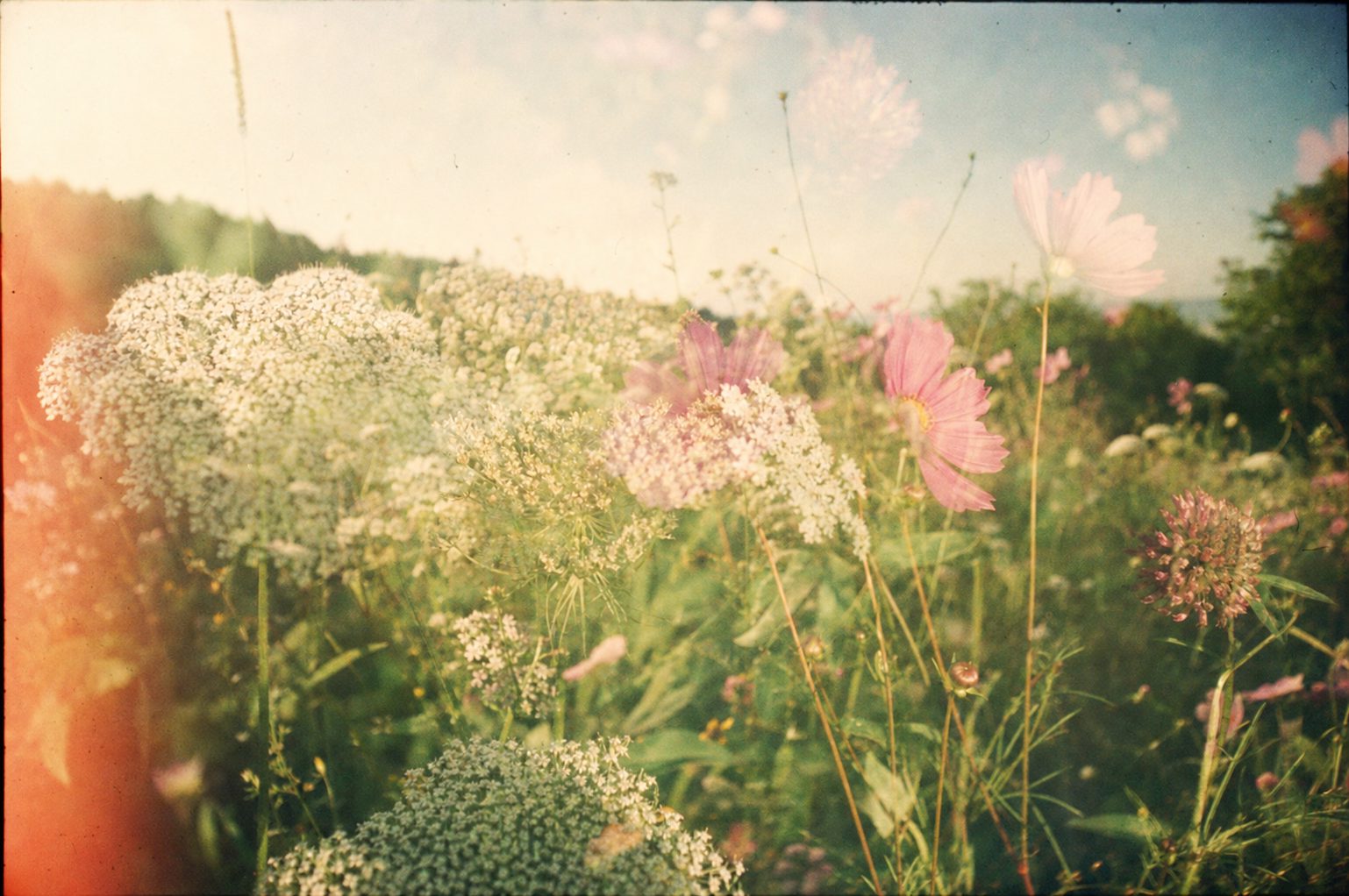
Yesterday afternoon I went to the field at the edge of town, the one that goes completely wild every May, all those tall grasses and the white flowers that look like lace and the occasional burst of something purple I never remember the name of. I had the camera out. I had this feeling of wanting to capture and also of not wanting to, of wanting to just be completely in it and let the pictures be an afterthought.
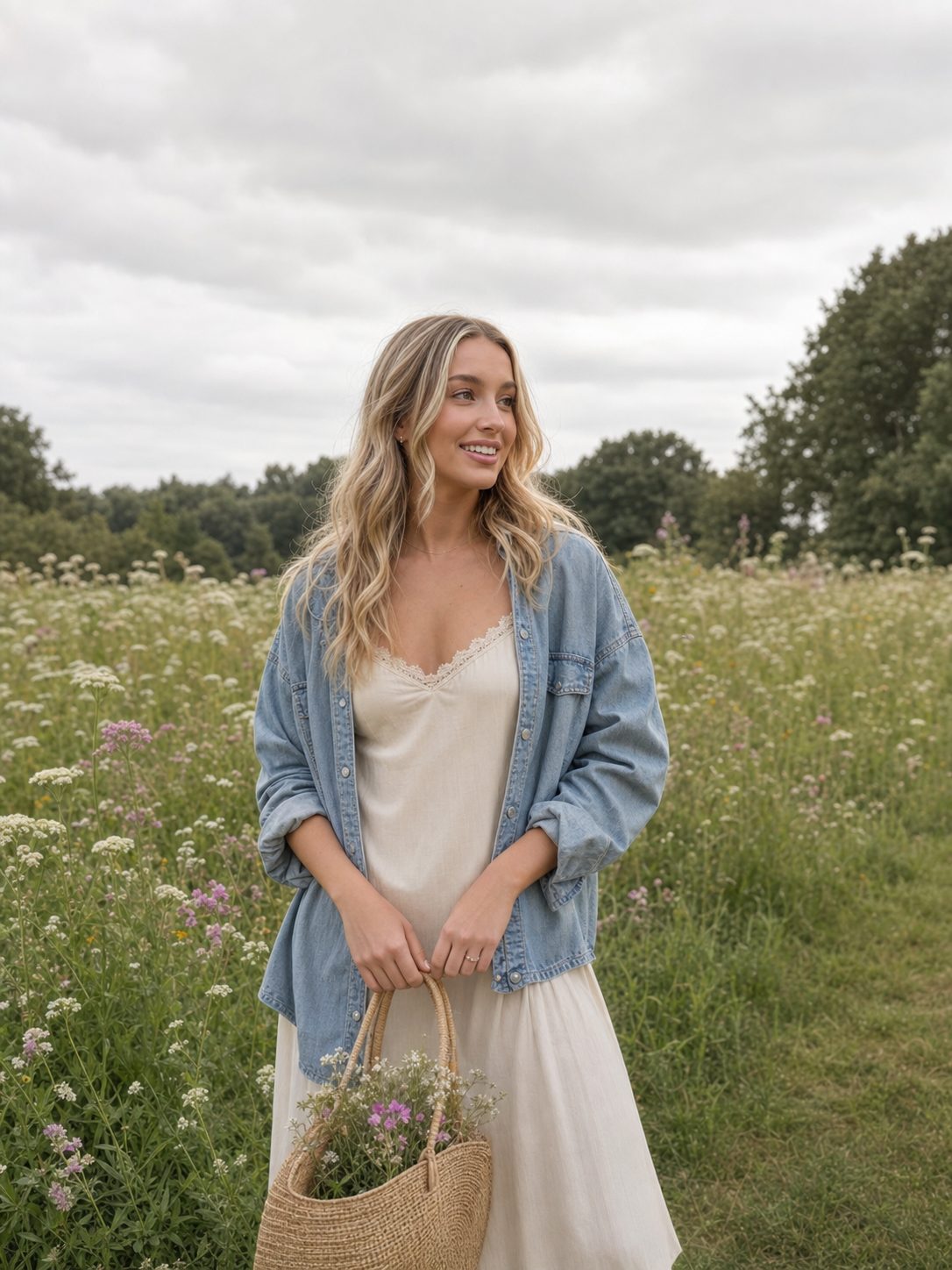
I stood at the edge of the field in the cream slip dress with the denim overshirt over it and the late afternoon light going gold and warm, and I took maybe ten pictures. Some of the field. One looking back toward the path. Two of my own shadow, long in the afternoon sun, which I've been taking versions of all year, I have a small series of shadow pictures now, different seasons, different light, and I love them collectively more than any single one. I put the camera down and stood there for a few minutes just watching the light move through the grass.
That moment, the camera in my hand and the decision to just look instead of capture, felt like the completion of something. Like the whole year of learning to use the camera differently had been building toward the ability to put it down without anxiety.
What the visual diary has become
I started the year thinking of photographs as content. I end it thinking of them as autobiography. That's the shift. That's the whole year in one sentence.
The images I've kept, the ones I scroll back to with something like affection, are the ones that tell the truth about an ordinary moment. They're not the best-lit or the best-framed or the most likely to perform. They're the ones where something real was happening and I noticed it and I reached for the camera because I wanted to remember, not because I wanted to show.
Some of those pictures have been shared. Quite a few have not. And I've come to think that the ones that haven't been shared are the most important ones, the ones that are entirely for me, that live in the roll like a private letter I wrote to my future self. You were here. You noticed this. The tea was hot and the rain was on the glass and you were alive and paying attention on an October Tuesday.
The camera is a way of paying attention, and the practice of it, over a year, has made me better at paying attention even when I'm not holding it.
I want to take more pictures of the ordinary. That's the thing I'm carrying into the next year of this. Not fewer, not more curated, not more strategic, just more of the small, specific, unheroic moments that I'm only just learning to see as worth keeping. The tea on the windowsill. The shadow in the late afternoon. The wildflowers whose name I still can't remember. The particular light on a May morning that I keep trying and failing to fully describe.
All of it. All of the ordinary. That's what the visual diary is for.
The shots I'd take differently now
If I went back to June 2025 with what I know now, I'd relax my grip immediately. I'd stop cleaning the background. I'd take more pictures of the mundane, the pile of books on the floor, the half-made bed, the kitchen at 7am with the mess of breakfast still on the counter. I'd take pictures looking out rather than always staging something to look at. I'd take pictures of my own hands, my own feet, the view from whatever chair I was sitting in. The autobiographical stuff, not the content stuff.
I'd also take more portraits of time. That sounds vague so let me be specific: pictures of clocks, or plates after eating, or the last bit of light in a window before it goes dark. Things that mark the quality of a particular hour rather than staging something pretty inside it. I've started doing this in the last few months and those pictures are some of my favourites in the whole roll. They feel like diary entries in a way that the carefully composed ones don't.
The other thing I'd tell myself: take more pictures you'll never post. The private roll matters. The camera as a private language between you and your own memory, not for anyone else's consumption, just yours, is one of the best things I've discovered this year. Some of the images that mean the most to me have never been on the internet and never will be. They're mine. They're the ones I scroll to when I want to feel located in my own life. That's a completely valid and important use of a camera, and I didn't know it going in.
One year of photographs. One person who got looser and more honest and more herself in the images. That's the arc I see when I scroll back through it, and it's the arc I want to keep following. More ordinary, more private, more mine, and occasionally, when something is really worth it, share the actual real thing rather than the staged version of it.