Six months of art journaling: what I made and what it made in me
In October I started an art journal. Six months later I've nearly filled it. I want to document what those pages actually contain and what making them has been.
In October, I bought a sketchbook. Nothing fancy, a cream-paged thing with a ring spine that I picked up from the stationery section almost as an afterthought, tucked under my arm with a set of watercolours that had been on sale. I told myself it was just to try. I had no idea I'd still be opening it every few days six months later, or that it would end up holding more of my year than anything else I own.
I've nearly filled it now. About four or five pages left, which I am being very deliberate about because I don't quite want it to be over. When I hold it, it's heavier than it looks. All those afternoons in there. All that trying.
What's actually inside
I want to be honest about this because I think when people hear "art journal" they picture something beautifully curated, the kind of spreads you see in posts online, with coordinated colours and vintage ephemera and handwriting that looks designed. Mine is not that. Mine is a record of what I was capable of on any given afternoon, which is sometimes very little.
There are pressed flowers, a few from autumn walks, two very flat ones from April that are almost translucent now, a sprig of something I think was rosemary. There are bad sketches. Genuinely bad. A window frame I attempted three times and each version looks like a different window. A mug I drew in pen while my tea was cooling that looks more like a goblet from a fantasy novel than the actual pale green thing sitting in front of me. A pair of hands that I tried to get right for an entire Sunday afternoon and eventually abandoned.
There are watercolour washes, some where the colours did what I wanted and dried into something soft and glowing, and some where everything went muddy and I just kept adding water until the page puckered. There are little written fragments alongside the images: a line I liked from something I was reading, a sentence I wanted to remember, once just a list of things I could see from where I was sitting. The light through the curtains. The sound of rain. The smell of the paint water going brackish in the glass.
It's not a beautiful object. It's a real one. And I've come to understand that these are different things.
The page I'm most proud of
There's a spread near the middle that I come back to more than any other. It's technically the worst-looking thing in the book. It happened in December, on a grey afternoon when I was feeling low and tired in that winter way where you can't quite locate the source of the tiredness. I sat down with the journal without a plan and just started making marks. I used a purple-blue that I'd been avoiding because it kept going garish, and I put it down wet and watched it bleed into the page. I added green without thinking. Then a kind of ochre. The whole thing looks like a bruise, honestly. The shapes don't resolve into anything. The composition, if you could call it that, is just whatever my hand did.
But I remember the afternoon it was made. I remember sitting at my desk in the low lamplight with no music on, just the sound of rain and the small scraping of my brush on paper, and feeling something ease in me. Not fix. Just ease. The page holds that. When I look at it now I don't see a failed attempt at art, I see evidence of myself on a hard day, making something anyway. That is worth more to me than any technically competent sketch.
The imperfect page is the honest one. It's the one that says: I was here, and this is what it looked like to try.
How the practice changed over winter
I noticed somewhere around November that my pages were getting darker. Not in mood exactly, more in palette and mark. In October I was using soft pinks and yellows, working carefully, trying to get things right. By January I was using deeper colours with less hesitation, and the marks were looser. Less concerned with accuracy. I think this is what happens when you do something regularly enough that you stop performing it and start just doing it.
The art drawing side of things, the actual representational sketching I'd been attempting, I mostly let go of by midwinter. Not because I gave up, more because I realised I was more interested in colour and texture than in getting shapes correct. So I stopped trying to draw my window correctly and started just trying to capture the feeling of the light through it. That felt like a shift into something truer. The journal started to feel less like a practice I was doing and more like a place I went to.
Winter pages have a quietness to them. Darker grounds, smaller details, lots of layering. I used a very dark navy on several December pages that I found endlessly interesting, the way it absorbed light differently depending on how thick I'd put it down. There's something fitting about that, I think. The depth of winter in a colour.
An April afternoon with the journal open
Last week I was sitting by the window in the afternoon and the light was doing something I wanted to put down. A particular spring green, not just one green but about five of them at once, the way the trees outside have that quality in April before everything settles into its summer density. I was trying to mix it. I had my watercolours out and my little ceramic palette going slightly beige from weeks of use, and I was working through combinations trying to find the right green.
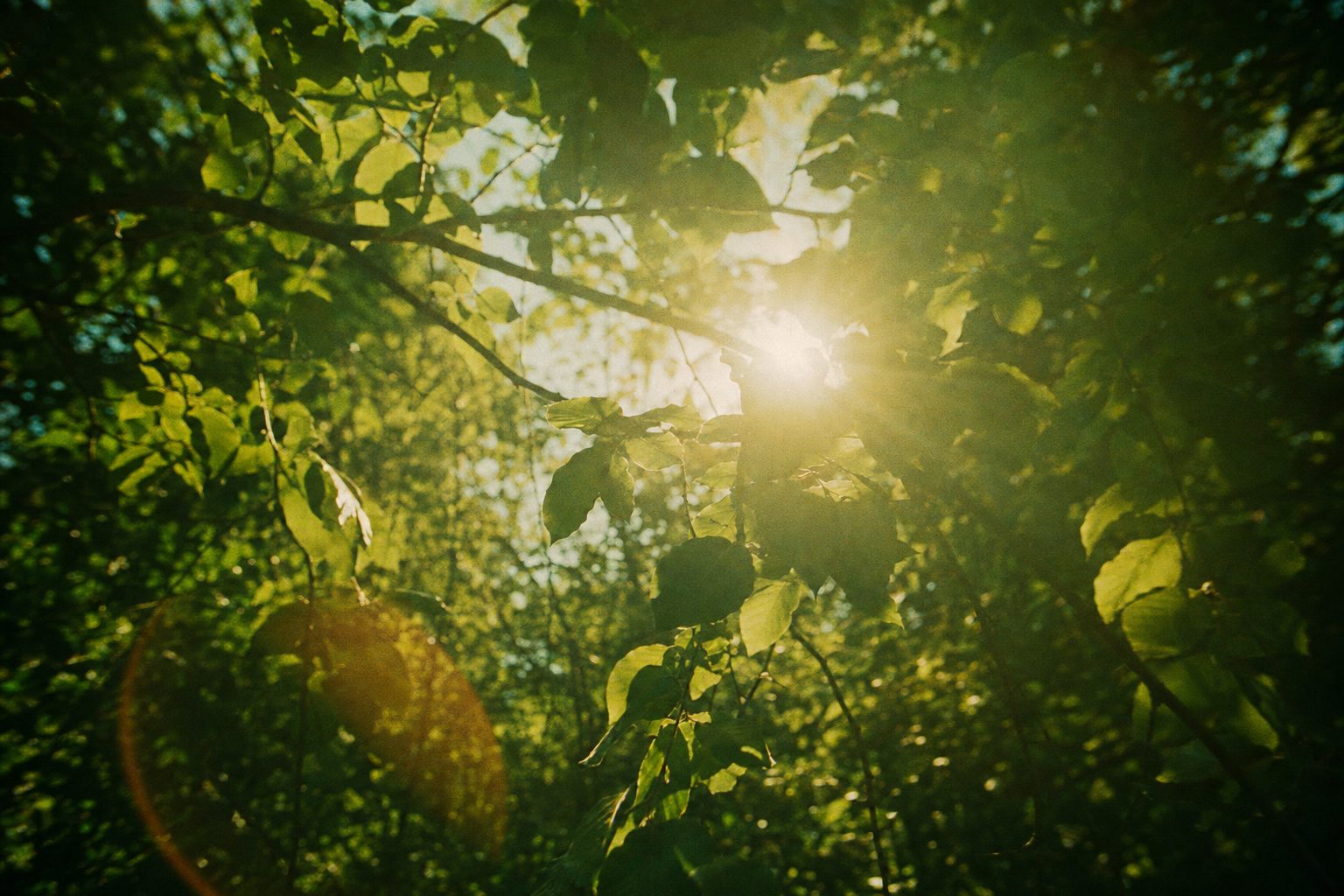
I got close. A mix of a yellow-green and something cooler, almost right, not quite. The afternoon light was coming in at an angle and falling directly onto the wet paint and making it glow in a way that the dried version simply wouldn't. I took a moment to just watch that. The wet paint lit from the side, that particular green light that exists only in April afternoons. I knew even as I sat there that I was inside one of those small, complete moments that you don't always recognise until after they've passed. And I was recognising it. That felt significant.
I don't think I would have noticed it, let alone sat still for it, before I started the journal. The practice of looking in order to paint has made me look differently everywhere.
What the journal holds that photos don't
I take a lot of photographs. My phone is full of them, the blossom I walked past last week, the particular colour of the sky at about 7pm when it goes this deep blue-green before dark, my flat in the morning light. I love them. But they don't hold the same thing as the journal pages.
A photo is accurate. A journal page is true. They're not the same thing. The photo of my window captures the window; the sketch of my window captures what I noticed about it, which turns out to be a different thing entirely. The smear of colour I put down for the evening sky captures nothing literally and everything I felt about it. The record of my creative process, the actual trace of my hand on paper on a specific afternoon, that holds something a photograph doesn't. It holds evidence of attention. Of being present in a way that is, somehow, physical.
I also think the imperfection of it matters. The bad sketches and the muddy colours and the pages where everything went wrong, those are as valuable as the ones that came out well, maybe more so. They're the record of learning, which is a different record than the record of achievement. And they're honest. They say: this is what I was capable of on this particular afternoon, with this light, in this mood, at this point in my understanding. That will never be true again in exactly the same way. There's something sacred about that, in its quiet way.
The question of showing the work
People sometimes ask whether I share the journal pages. The honest answer is: rarely, and carefully. There's something about the pages that feels different from a finished photo or a polished post, they're more interior, more honestly imperfect, and I'm protective of that. I've shown a few on stories. The response is always warmer than I expect, which shouldn't surprise me by now but still does. People seem to respond to the made-in-real-time quality, the evidence of process over product. Maybe because so much of what we see online is finished and curated and already approved by its maker.
The pages that went wrong are the ones people respond to most. The muddy purple-and-green bruise page from December, which I did share once, more comments on that than almost anything I've posted. I think it touches something in people who have also made something that didn't work and found value in it anyway. The imperfect trace of being alive and trying. That's universally recognisable, if you let it be.
I'm slowly learning to share it more. Not all of it, some of it stays private and should stay private, the pages that are raw in ways that aren't ready for company. But the ones that show the learning, the trying, the honest quality of a practice that doesn't always produce beauty, those feel increasingly like things worth putting into the world. They say something true about what making things actually involves.
Six months. Nearly a full journal. I already have the next one picked out, the same cream-paged ring-bound sketchbook, waiting. I'm not going to make it precious by planning. I'm just going to open it on some afternoon in April and start.
The record of your creative process is as valuable as anything you make. I believe that completely now. Not because it sounds like the right thing to believe, but because I have the evidence sitting on my desk, heavier than it looks, full of trying. The evidence of showing up, afternoon after afternoon, with the paint water and the bad sketches and the almost-right greens. That record is something. It's something I didn't have before October, and I'm not going back to not having it.