A solo overnight in the woods and what it did for my nervous system
I'd been saying I wanted to do a solo camp trip for two years. Last month I finally stopped looking for someone to go with and just booked a spot. It was one of the best decisions I've made this year.
For two years I told myself I wanted to do a solo camping trip. For two years I found reasons not to. It was never the right weekend, or I didn't have the right kit, or I'd convinced myself it would be better with company, that I'd do it with a friend when schedules aligned, when someone else was also in the mood for it, when the planning felt easier because there were two people to share the decision.
The schedules never aligned. They almost did, twice, and then they didn't. And one afternoon in late June I was sitting with my cold tea and my paper journal, writing something irritating about how I never seemed to actually do the things I said I wanted to do, when it occurred to me: the only thing standing between me and this particular thing was me waiting for company that wasn't coming.
I booked the spot that evening. A small patch of permitted woodland camping about two hours from home. One night. I'd leave Saturday morning, come back Sunday afternoon. I closed the booking confirmation and immediately felt something that was about sixty percent excitement and forty percent pure, clean fear.
The decision and the packing
The packing was where I thought I'd talk myself out of it. I'd watched enough camp setup content to know that people can make this look either very serene or very overwhelming, and I was determined to land on the serene side without pretending to be more outdoorsy than I am. I am a person who mostly lives inside a flat. My relationship with nature is enthusiastic but genuinely amateur.
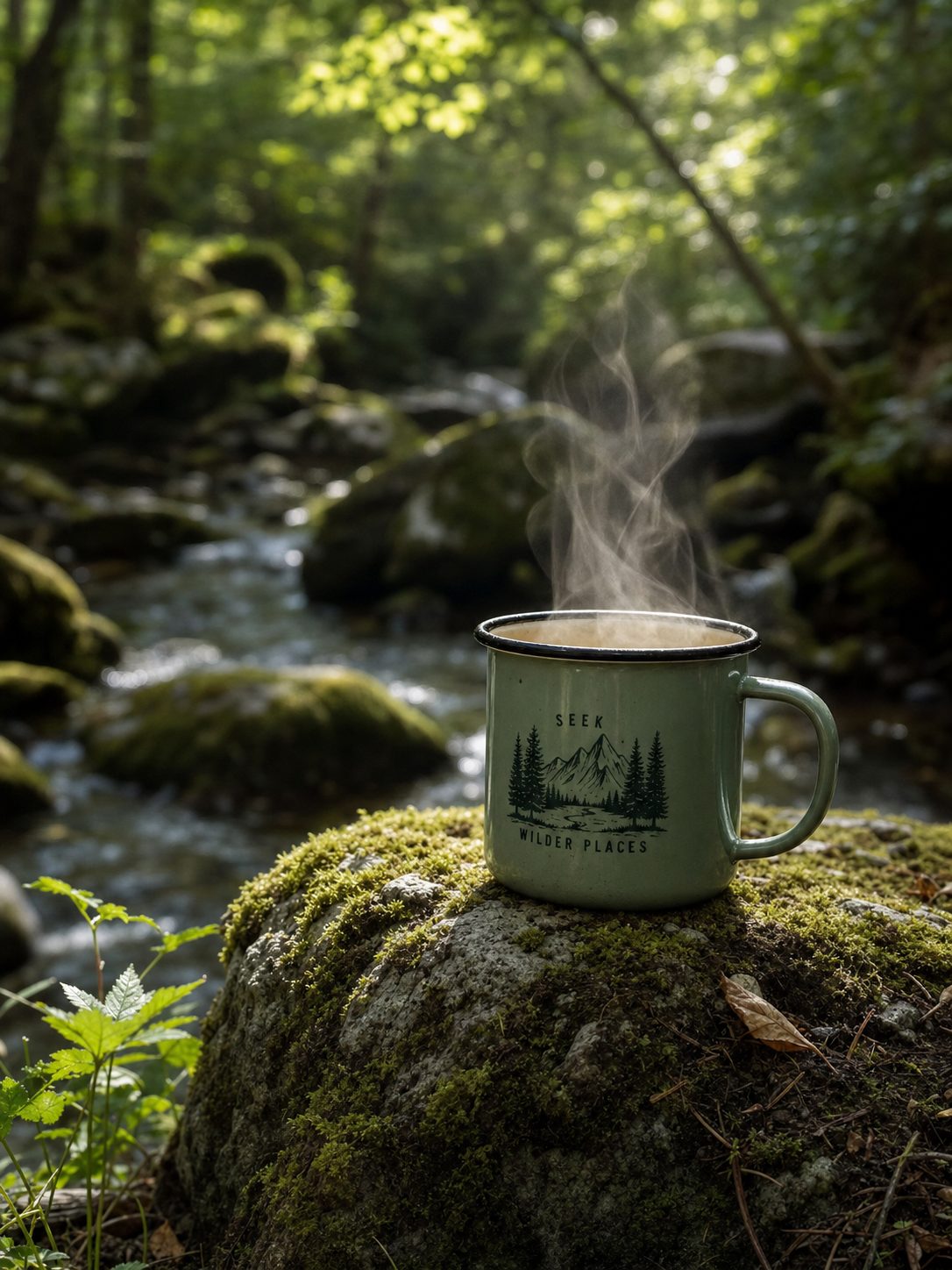
I made the list long, then cut it in half. Then cut it again. The things I kept: a lightweight one-person tent (borrowed from a friend who had been camping three times and used it twice), a sleeping bag rated for cooler temperatures than I expected, a small gas stove, food that didn't need much preparation, a torch with actual batteries I had checked the night before, a journal, one book I wasn't sure I'd read, my headphones, and my camp mug, a squat, battered enamel thing that I'd had for years and loved irrationally.
The things I left behind: my laptop, my ring light, most of my anxieties about the trip being a very silly thing to do alone. The last item was the hardest to leave behind. I kept picking it back up.
But here's the thing about the edit, the version of camp setup that made it feel manageable, not overwhelming, it was really just about trusting that I needed less than I thought. That I would not, in fact, need three backup options for every scenario. That I was going to a woodland site two hours from home, not an expedition. The first time you do something alone is almost always the scariest version. It rarely justifies the fear it arrives with.
The first night
I pitched the tent in the early evening, still warm and golden, the trees doing that late-summer thing where the light comes through in long slanted lines and everything looks a bit enchanted. The tent went up faster than I expected, something to do with the instructions being better than I'd assumed, or maybe just the particular focus that happens when you have no one to hand things to and must figure it out yourself.
The sounds started when the light went. I'd been warned about this by every camping video I'd ever watched: the first night in a forest, alone, the dark is more thorough and the sounds are more various than you have any experience with. Rustling. Things moving in leaves. The wind doing something structural in the canopy above that sounded purposeful and wasn't. A bird, or I assumed it was a bird, I still don't know what bird makes that particular sound, calling from somewhere off to the left in a way that was beautiful and also slightly alarming.
I lay in my sleeping bag with my torch off and waited to feel scared. And I kept waiting. And it didn't really come. What came instead was something closer to novelty, the body's response to being in an entirely unfamiliar set of sensory information. Not danger. Not safety, exactly, just yet. Something in between that gradually, over about an hour, settled into something I can only describe as animal calm. The kind that has nothing to do with thinking and everything to do with just being where you are.
I slept surprisingly well. I woke once at around three when something large moved past the tent, probably a deer, I told myself, almost certainly a deer, and lay still for a few minutes listening to it pass. Then I went back to sleep.
Morning coffee on the mossy rock
This is the part I think about the most when I think about that trip now.
I woke early, maybe five thirty, the light arriving soft and indistinct through the tent fabric, everything still more grey than gold. I pulled on my fleece, unzipped the tent, and stepped out into air that was cool and smelled of damp earth and something faintly resinous from the pines. Mist sat between the trees in low, even layers. The stream I'd camped near was audible before it was visible, a steady, unhurried sound, ancient and unconcerned.
I set up the little stove on a flat patch of ground and made coffee. This is not a sophisticated process, it's a metal filter thing, hot water, patience, but in that particular morning it felt ceremonial. I carried the camp mug over to a mossy rock at the edge of the stream and sat down.
The mist moved. The stream went on. A bird, a real one this time, visible, small, determined, worked its way along the bank doing whatever birds do at five thirty in the morning with great focus. I had no signal. I wasn't scrolling. The only information arriving was the immediate present: the temperature of the mug in both hands, the cold air on my face, the smell of the coffee and the forest, the sound of water over stone.
I don't know how long I sat there. Long enough for the mist to start lifting. Long enough for the light to turn from grey to something warmer and more certain. Long enough to feel, in a way I hadn't felt in a while, genuinely present in my own life.
What nature does to a nervous system
I've read things about this, the way time in nature genuinely changes what's happening in the body, the nervous system downshifting from the constant low-grade vigilance that city life and social media and the general ambient noise of having a phone in your pocket seems to require. I believe it intellectually. I now also believe it from experience, which is different.
There is something specific about the removal of signal. Not just the phone going quiet, I could put my phone in a drawer at home if I wanted. It's the absence of the option. The fact that there's nothing to check even if you wanted to. The decision has been made for you by geography, and the absence of the choice is its own kind of rest.
By Sunday morning I had been fully present for approximately sixteen hours and my brain felt like a room that had been very gently aired out. Not empty. Not blank. Just cleaner. Quieter in a way I hadn't known it could be. I packed up slowly, deliberately, with the particular care of someone who doesn't want to hurry away from the thing they're in.
The first time alone is always the hardest version
Driving home I made a mental list of everything I'd do differently next time. Better food choices. A slightly longer stay. A site closer to water. I was already planning the next one before I'd fully processed having done this one, which felt like a good sign.
Every first time you do something alone will be the hardest version of it. The second time is so much lighter. Go do the hardest version.
I'm already planning a two-night trip for autumn, when the light is lower and the leaves are doing their thing and the air is cool enough that the sleeping bag earns its keep properly. I'll tell you how it goes. I'm nervous already. That feels right.
What I keep coming back to, thinking about that Sunday drive home, is how small the actual risk was in proportion to how large I'd let the imagined risk become. Two hours from home. A managed woodland site with other people nearby. A tent that had been up before. I was never in any danger. The only thing that was in danger was the comfortable story that I needed company to do things, that certain experiences required the right companion, the aligned calendar, the plans that never quite materialised. Doing the trip alone dismantled that story so efficiently and so gently that I'm still a little surprised.
There's a freedom that comes from taking yourself somewhere. From being the sole decider about when to eat, when to walk, when to just sit still on a rock. Nobody else's pace to match. Nobody else's comfort level to consider. Just yours, and the quiet education of discovering what yours actually is without the social negotiation that usually shapes it. I walked slowly. I stopped often. I sat for twenty minutes watching the stream do nothing in particular because I wanted to and there was nobody to grow restless and suggest moving on.
I think about the solo camp setup a lot when I'm stuck in the flat on a rainy August afternoon feeling the walls come in slightly. The memory of the moss under my hand on the rock by the stream, cool and specific and completely real. The memory of the coffee steam in the cold morning air. These things are still mine, stored now, available for retrieval. The first time you do something alone is always the scariest. And then it becomes a place you can return to, even just in your head on an ordinary Wednesday, when you need the reminder that you are more capable than you think you are. 🤍