The book I read this July that I keep thinking about
I have a habit of buying books I'm not ready for yet. This summer I pulled one off the shelf that I'd been walking past for months and it turned out I was finally ready for it.

There's a particular shelf in the bookshop near the park, the small independent one that smells of paper and something faintly floral, that always has a hand-written recommendation card tucked into the front of the most unexpected titles, where I've been hovering for months without fully committing. It's the kind of shelf that doesn't announce itself. It isn't the new releases display or the staff picks table by the door. It's somewhere in the middle of the shop, tucked between travel writing and something vaguely labelled "Life & Meaning," and it's where I keep finding books I'm not ready for yet.
This summer I pulled one off that shelf that I'd been looking at since late spring. I'd picked it up twice, read the back cover, put it back. Not because it didn't interest me, it did, immediately, the way certain books do before you've read a word, but because I had the distinct, inexplicable sense that I wasn't there yet. That the book was waiting for me to catch up to it.
On a quiet Tuesday afternoon in early July, I was there. I bought it, walked home with it in my canvas bag, and had it open by four o'clock. By six I had put it down four times, not because it bored me, but because it kept hitting something so squarely that I needed to stop and sit with it before the next sentence could land properly.
What the book is about
I'm going to be deliberately vague about the title, not because I'm being coy but because I've found that recommending books to people with a lot of enthusiasm sometimes creates an expectation that the book itself can't meet, and this particular one deserves to find you rather than be pushed at you. What I'll say is that it was somewhere in the territory of what r u doing reading, of finding meaning in smallness, in slowness, in the kind of life that doesn't make a great story at a dinner party but that feels, from the inside, genuinely full.
It was not a self-help book in the sense I usually mean when I say those words slightly apologically. It didn't have a five-step framework or a pyramid diagram or a chapter called "Putting It All Together." It read more like a series of long, considered letters from someone who had thought carefully about what a well-lived life might actually look like, not in the grand, achievement-metrics sense, but in the texture-of-a-Tuesday-morning sense. The kind of book that asks you to slow down not as a strategy for getting more done later, but as an end in itself.
The passage that stopped me
I was about a third of the way through when I hit the passage. I'm not going to quote it here because I think that would diminish something about it, the way certain passages belong to the specific hour you first read them, and removing them to a blog post strips the context that made them hit, but the gist of it was this: that we often defer the feeling of enough. That we build enormous internal narratives about the conditions under which we will finally relax, finally arrive, finally be okay, and those conditions are always just slightly out of reach. Not impossibly far. Just: not yet.
I put the book face-down on my chest and looked at the ceiling of my flat for a while. A proper while. Not the kind of pause where you're composing a reply to a text, but the kind where your brain is actually doing something slow and necessary.
I thought about how many times in the last year I had told myself some version of: when this one thing is sorted, I'll feel better. When the flat is tidier. When the videos get more views. When the routine sticks. When I lose the three kilos. When the thing I'm worried about resolves. And how the thing always resolved and another thing arrived to take its place, seamlessly, as if the not-yet-ness itself were the point.
The right book finds you when you stop looking for the right book.
Reading it in the park
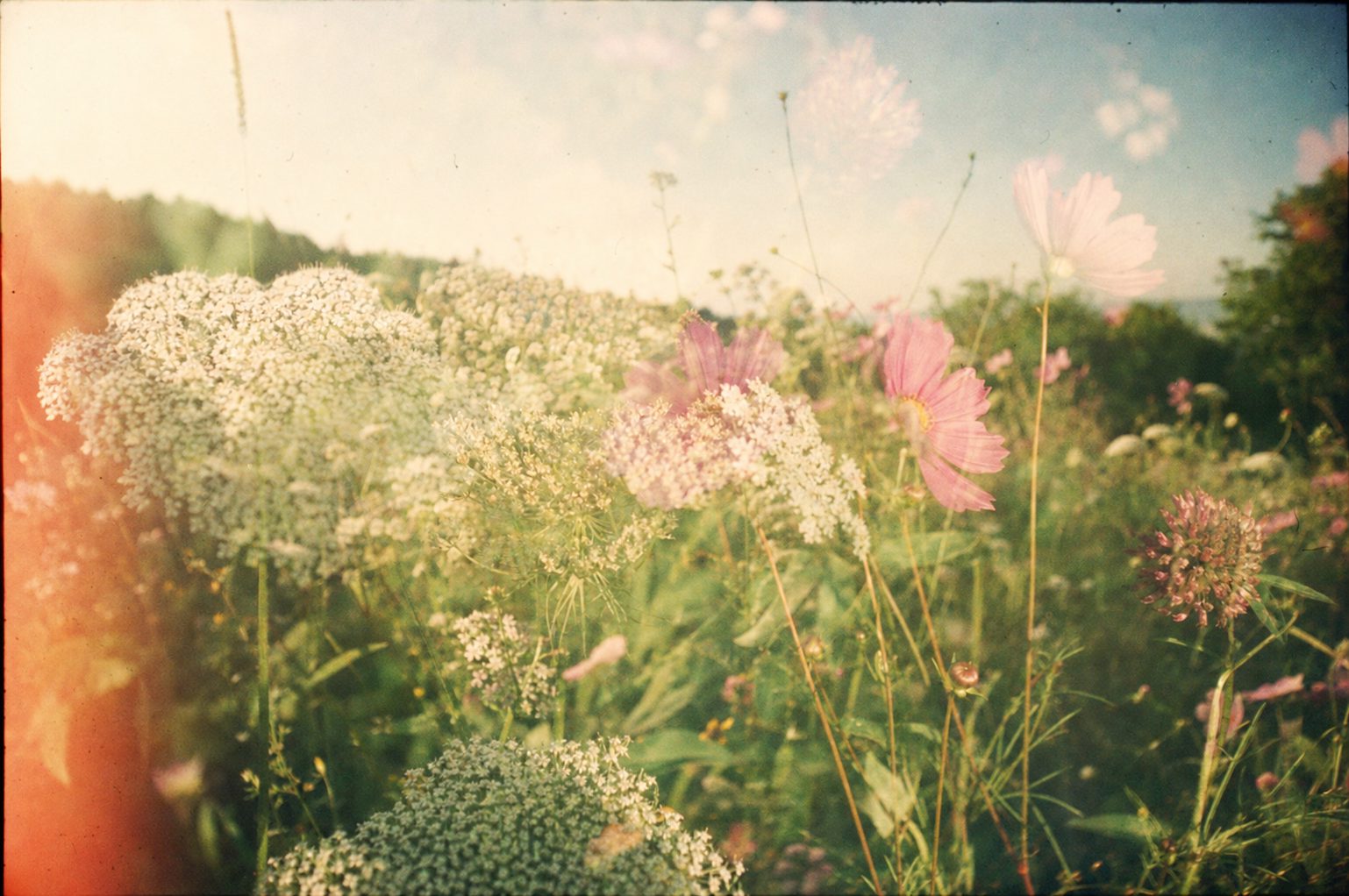
About halfway through, I took it to the park. It was a Thursday afternoon, warm but not the sticky suffocating kind of warm, the kind with a light breeze that makes the trees move and the light through the leaves goes dappled and shifts as you read, so the page is half-bright, half-shadow, and you have to angle the book slightly. I love reading in conditions like this. It requires just enough physical attention to keep you from drifting into your phone.
I lay on my back on the grass for a while with the book on my face, not even reading, just listening to the park do its park thing. Children in the distance, a dog barking twice and then stopping, someone's music just barely audible from the path. The smell of warm grass. Sunscreen on my own arms. I felt, in that particular hour, completely located. Nowhere I needed to be. Fully in the specific June afternoon I was actually inside.
The book had done that, given me permission for something I struggle to give myself. Which is just: to be in a day without running it, without narrating it toward the next thing. To sit with the summer afternoon because it was a summer afternoon and it wouldn't last and that was enough reason to be present for it.
What it unlocked that I didn't know was waiting
I've been doing this, writing, posting, building something small online, for long enough now that I've hit the first wave of self-consciousness about it. The period where you start comparing. Where you notice who's growing faster and who sounds more polished and who seems to have figured out something about the whole thing that you're still groping toward. It's an unglamorous phase. It has a way of making you feel both behind and uncertain of the destination, simultaneously.
The book talked about that too, in its own way. About the particular trap of measuring a life by its visibility, by how many people can see it, how impressive it looks from outside, whether it would make a stranger say "oh, that sounds interesting." And it asked a question I've been sitting with ever since: what if the life that feels genuinely good to live is often not the most impressive one to describe?
That landed somewhere specific. I've been trying to build something that feels right from the inside, that reflects what I actually care about, that I'm proud of on the quiet mornings when no one's watching. And the book reminded me, in the kindest possible way, that this is not the same project as building something the algorithm rewards. Which I already knew, but needed to hear again.
I finished it on a Sunday night, sitting up in bed with the amber lamp on and a cup of chamomile tea going cold on the nightstand. I closed it and held it in both hands for a moment, which is a thing I only do with books that have done something to me. Then I put it on the nightstand, on top of the stack, where I can see the spine from the bed.
I've been thinking about it almost every day since. Not about the whole of it, more about fragments. Certain sentences that arrive unbidden on the bus, or in the shower, or in that strange half-awake space just before sleep. The ones that found the right place in me. The ones I was, apparently, finally ready for. 🤍
On buying books you're not ready for
There's a habit I've developed that I only recently understood the logic of: buying a book when something in me responds to it, even if I'm not ready to read it yet. I have a small pile of these, books I've acquired at the right moment but haven't opened, or opened briefly and quietly closed. They sit on the shelf and I walk past them and occasionally I pick one up and read a page and put it back and wait.
It sounds like avoidance. Sometimes it is. But sometimes it's something more like instinct, a knowledge, imprecise but real, that the thing in me that needs to receive what this book is saying isn't available yet. That the particular nerve it's trying to reach is under something else, and first the something else needs to shift.
The July book was waiting for something to shift, and something had, something to do with the first few months of building this diary, this small corner of the internet, this experiment in showing up without knowing where it's going. The book found me because I was, finally, at the point where what it had to say about slowness and meaning and the texture of ordinary days was more useful to me than any amount of growth strategy or optimisation content. I was ready to hear a quieter argument about what a good creative life might actually look like.
If you have books on your shelf you haven't opened yet: some of them are probably just books you thought you should own. But some of them might be waiting. Worth picking them up occasionally and testing the temperature. The one that's warm in your hands on a particular Tuesday afternoon might be exactly the one you needed to find.