My honest TikTok shop wishlist for winter: with caveats
I've gotten more selective about TikTok shop purchases, my earlier impulse-buy era taught me a lot. Here's my current wishlist and the thinking behind each thing.
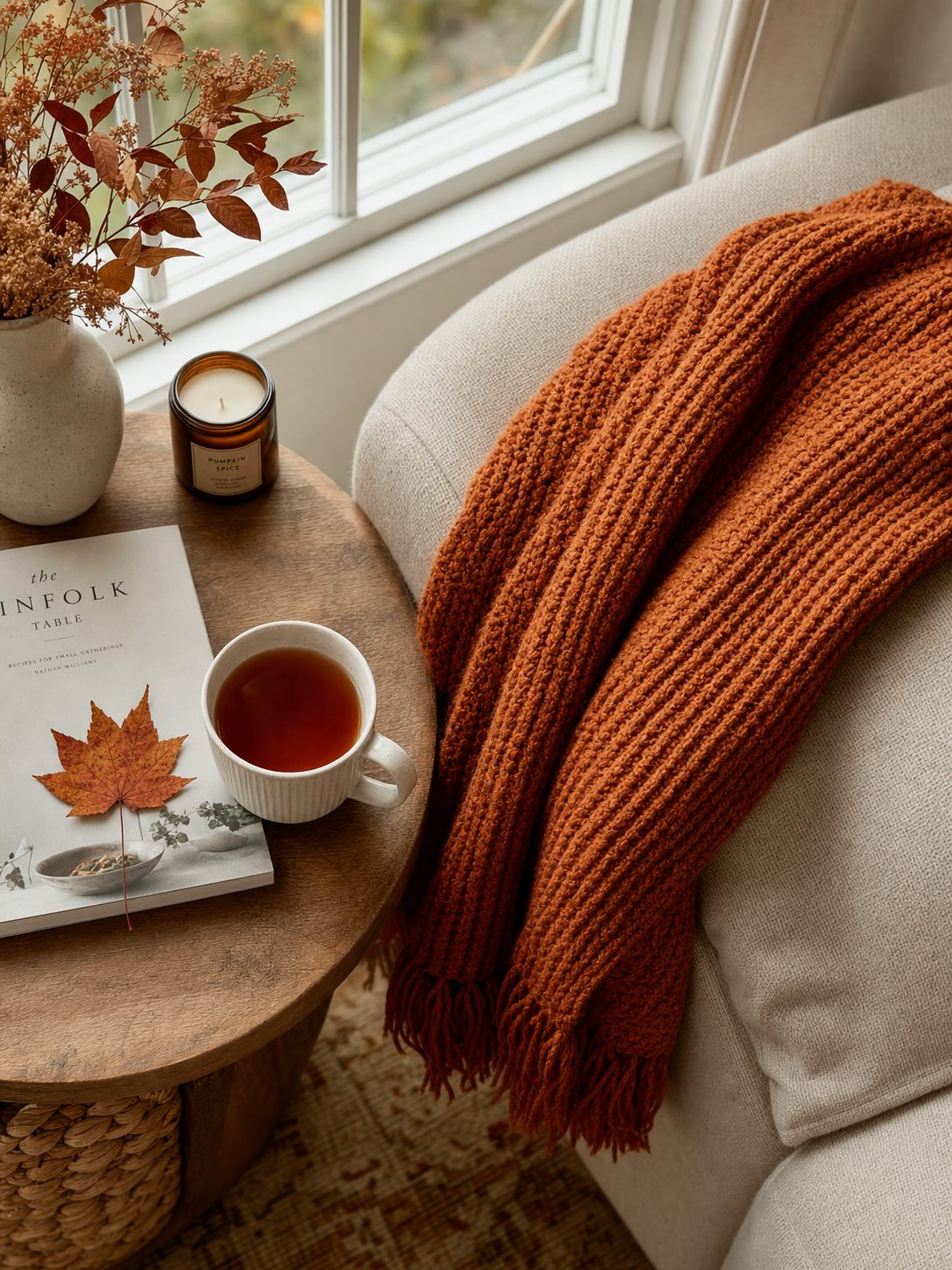
Sunday morning, mid-December. I am in bed with a large mug of tea, the blue one with the slightly chipped rim that I can't bring myself to retire, and my phone, and I have my saved items open on TikTok shop. This is a thing I do occasionally: not buying, just looking. Sitting with the things I've saved and noticing how I feel about them in the cold light of a Sunday, a few days or a few weeks after I first tapped the save button.
I went through a phase earlier this year, autumn, mostly, of impulse buying with some frequency. Nothing catastrophic, nothing I regret deeply, but enough to teach me something useful. The things I bought in the moment of wanting them were almost always fine for a week and then unremarkable. The things I made myself wait on, returned to later, considered carefully, those are the things I still use. The things that actually improved a daily ritual instead of just feeling exciting for a brief window before receding into the general landscape of my small flat.
So now I have a process. Not a rigid one, I'm not filling in spreadsheets about consumer decisions, I want to be clear, but a simple filter that has saved me from a few purchases I would have regretted and helped me finally commit to a few that genuinely made sense. Here's what's currently in the saved list and where each one sits.
The three that have been living there for a month
The first is a weighted sleep mask. I've wanted one for a while. Not a flat eye mask, I have those already, but one with actual gentle weight to it, the kind that applies light pressure to the eyes and apparently helps with that specific thing where you close your eyes but your face doesn't quite believe it's time to stop. I've read enough about it to think the mechanism is real. I've been sitting on it for about six weeks.
The second is a small ceramic bowl, the kind with a poured glaze, slightly imperfect, the sort of thing that looks genuinely beautiful sitting on a desk or windowsill. I already have too many bowls. I know this. But this one has a quality that the others don't, and I keep coming back to look at it, which is usually the sign that something has moved from "seemed interesting" to "actually want." Still sitting with it.
The third is a pair of linen pillowcases in a particular shade of sage. I have cotton ones. They're fine. But something about linen pillowcases, the texture, the way they look like they've been lived in even when they're new, keeps pulling my attention. This one has been saved the longest. It might be time.
The filter I run them through
The question I ask before buying anything I've saved is this: will this improve a daily ritual, or will it just feel nice for a week? It sounds simple. It is simple. But it cuts through a remarkable amount of impulse purchasing when you actually sit with it honestly.
A weighted sleep mask: yes, potentially, if the mechanism works for me, that's a daily ritual, sleep is a daily ritual, anything that meaningfully improves it is worth the cost. The ceramic bowl: no, honestly, I have bowls, it will feel lovely for a week and then be a bowl among bowls. The linen pillowcases: yes, I sleep every night, the texture of what my face rests on is something I encounter daily, upgrading it is a ritual upgrade.
The filter doesn't always give a clean answer. Sometimes a thing will improve something but only incrementally, and then the question becomes whether the cost justifies the marginal improvement. Sometimes I honestly can't tell from the product listing whether it will improve the ritual or just feel like it will, and that uncertainty is usually enough to make me wait longer. The cool things to buy on TikTok shop conversation that happens constantly in comments and duets is often about the feeling of buying rather than the experience of owning, and I've learned to notice that distinction in myself.
The two I finally ordered
A small beeswax candle, unscented, and a set of linen napkins in off-white. Both things I'd had saved for almost two months. Both things that passed the ritual filter easily: I light candles daily in winter, and I eat at my little desk most evenings, and the napkins I've been using are the paper kind which is fine but not the thing I want to use when I'm trying to make a quiet dinner feel like an occasion.
What made me finally order them was actually unrelated to the products themselves. I'd been reading something, I can't remember where, about the concept of giving yourself the nice things rather than waiting for a reason to deserve them. That you don't have to earn linen napkins. You don't have to wait until you have a dinner party or a better kitchen or a more organised life. You can just have them, because you eat dinner every day and you might as well use the nice thing.
The beeswax candle arrived in a small cardboard box and it smelled perfect before I'd even lit it. The napkins arrived folded and slightly stiff in the way new linen always is, and I ironed them and put them in the drawer and they've been a small, disproportionate pleasure every time I use one. This is what I mean by a ritual improvement. Small. Daily. Real.
Desire is fine, it's the pause between wanting and buying where you get to know yourself a little better.
The one I'm still not sure about
There's a little lamp in my saved list. A table lamp with a specific quality of glow, warm, very warm, almost amber, that looks in the product photos like exactly the kind of lamp that would change the feeling of my desk corner in the evenings. I have a lamp already. It's adequate. But this one has a warmth to it that the adequate lamp doesn't.
I've been sitting on this one for about three weeks and I keep almost ordering it and then not. Part of the hesitation is that lamps are difficult to assess from product photos, the glow in the photo might be the product being photographed under specific conditions, might be edited, might just be the angle. I've ordered lamps before and been surprised by how different the actual light felt in the room. So I'm waiting for either a video review that shows it in a genuinely relatable setting, or for the want to either deepen into certainty or dissolve into indifference.
This is the part of the process I've come to enjoy, actually. The sitting with a want without immediately resolving it. Wanting something without having it yet is its own kind of pleasure, anticipatory, unhurried, not particularly anxious. There's a version of consumer culture that treats the gap between want and purchase as a problem to solve as quickly as possible. I've started treating it as a space to inhabit for a while. The Sunday morning in bed, the mug of tea, the saved items scrolled through slowly. The deliberate pleasure of wanting without immediately having.
The lamp may come home eventually. Or it won't. Either way, I've already gotten something from the wanting, that particular quality of low-stakes looking forward. Which might be the most honest thing I can say about my relationship with TikTok shop at this point in my life.
What the impulse-buy era actually taught me
I feel some fondness for my autumn impulse-buy phase now that I'm out the other side of it. Not pride, exactly, but something gentler, recognition of where I was and why I was making the choices I was making. I was new to being more settled in my flat, new to having a space I was actually trying to build rather than just exist in, and TikTok was showing me an endless supply of things that could make that space feel more intentional. The impulse was good. The execution was sometimes premature.
What I bought in that phase taught me something I couldn't have learned any other way: what I actually use versus what I only want in the wanting moment. The distinction is genuinely important and genuinely only visible in hindsight. Some of those purchases are now objects I reach for daily and feel pleased about every time. Others live in a drawer and occasionally surface when I'm looking for something else and remind me of a week when I thought I needed them.
The filter question I run things through now came directly from that education. Will this improve a daily ritual or just feel nice for a week? It's a question I can only ask meaningfully because I know, empirically, that some things only feel nice for a week. That knowledge came from buying them. I don't regret the education. I just try to pass the knowledge forward into the next purchase decision rather than keep relearning it.
The wishlist and the deliberate pause are the practice that emerged from that. Sunday mornings with tea, looking at saved things, being honest with myself about which category each item actually belongs to. It sounds small. It saves me a surprising amount of money and a surprising amount of the specific mild disappointment that comes from buying a thing and finding it doesn't do the thing you hoped it would do. I'll take the Sunday morning version of wanting over that disappointment, most weeks.