The version of peace I've actually found
I've been posting about peace and self-compassion for a year now. I want to say something honest: the peace I've found is nothing like the peace I described when I started. It's quieter and stranger and better.
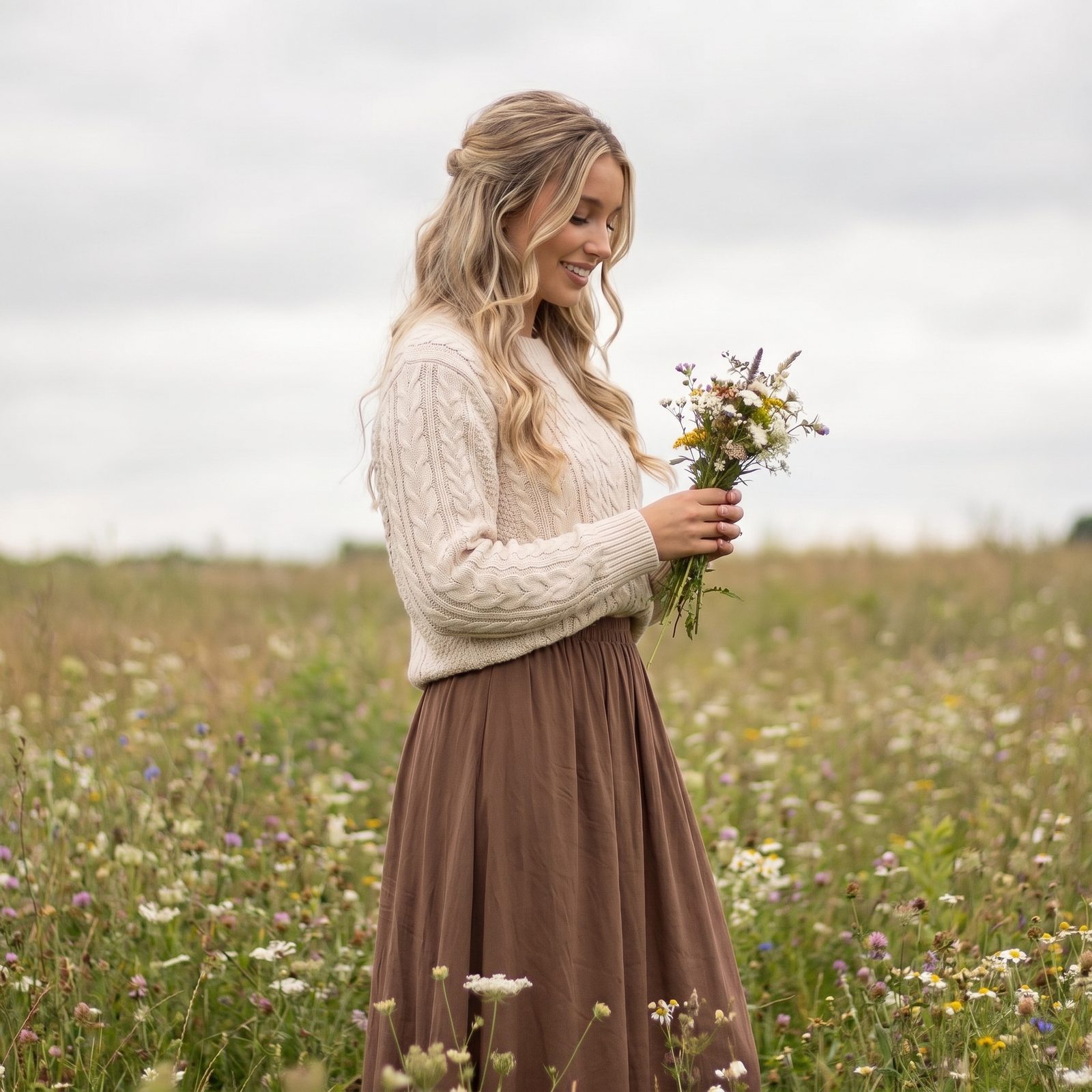
When I started this diary a year ago, I talked about peace a lot. It was in nearly everything I wrote. I was chasing it, describing it, aspirationally decorating my captions with it. Peace over panic. Choosing peace. Building a peaceful life. And I meant all of it, genuinely, desperately, from a place of not having enough of it. I was describing the destination I wanted to reach rather than the place I was standing.
Now, a year on, I have something I'd actually call peace. And I want to be honest about it, because it is nothing like the thing I was describing when I started. It's quieter and stranger and honestly better. But it doesn't look like the peace I used to picture when I closed my eyes and said the word.
The peace I thought I was looking for
The peace I imagined was permanent. That was the key feature of it, once you arrived, you stayed. A state of having resolved the anxious thoughts, of being done with the self-criticism, of moving through the world without the low-level static that seemed to follow me everywhere. I thought peace was a permanent frequency you could get tuned to and then keep there. I thought people who seemed peaceful had found the setting and locked it in.
I also thought it would feel like an absence. Absence of doubt. Absence of the inner critic. Absence of the restlessness that made me lie awake sometimes not quite worrying about anything specific, just vaguely unsettled in the way of an animal that can't quite identify the weather change that's coming. I thought peace meant all of that went away.
Finally being at peace with yourself, I assumed, would feel like a door closing on something that had been drafty and cold for years. Sealed. Warm. Done.
What I actually found
What I found is more like a muscle than a room. It requires use. It gets stronger with practice and weaker with neglect, and there are days when it feels very strong and days when something catches me off guard and I have to find it again. It doesn't stay locked in. It has to be returned to. That isn't a failure of the practice, I've come to understand that is the practice.
The inner critic didn't disappear. That surprised me most. I think I expected that doing the work, the journaling, the gentler self-talk, the patient repetition of choosing a kinder response to myself, would eventually retire the critic. What happened instead is that the critic got quieter. Less convincing. Less automatic. It still shows up. But now when it does I can hear it without fully believing it, the way you can hear rain on the window without worrying it's going to come in. It's a sound. It's just a sound now. That's a profound change, even though it probably doesn't sound like one.
My own voice got louder. That's the other thing. Not louder in an assertive, I-have-opinions way, I've always had opinions. Louder in the sense of clearer. More mine. When I'm writing a post or talking to camera or even just having a conversation, there's a stronger signal of what I actually think underneath the noise of what I'm worried someone else wants to hear. I trust it more now. I follow it more.
The cobblestone afternoon in May
There's a street not far from me with cobblestones and a row of little market stalls on Saturday afternoons. I've been to it maybe six or seven times since spring arrived. Last Saturday I was there in the white linen, the loose set I keep reaching for every time the weather tips into warmth, with the straw bag over one shoulder, and I bought a small bunch of lavender from a woman who clearly grew it herself, and I walked that street at the pace of someone who has nowhere else to be.
That pace. I want to write about that pace for a moment, because I think it's one of the clearest ways I can point to where the peace actually lives now. A year ago I walked everywhere with a sense of urgency that had no specific target, rushed without a reason, always slightly late for something undefined. The cobblestone street, if I'd visited it then, would have felt beautiful but slightly separate from me, like a backdrop I was moving through on my way to somewhere else.
On Saturday I was completely in it. The lavender smell of the stall. The sound of the cobblestones under my shoes, slightly uneven, which I've always loved. The particular quality of the May afternoon light, going golden already at four o'clock. The weight of the bag on my shoulder. I wasn't filming it. I wasn't composing a caption for it in my head. I was just standing in it, completely there, unhurried and unworried. And the peace I felt in that moment was not the absence of anything. It was the presence of everything.
It arrives sideways
This is what I'd say to anyone starting where I started. It doesn't arrive the way you expect it to. You do not wake up one morning and discover that you've reached peace. You don't finish the book, or the therapy, or the journaling practice, and walk out the other side into a permanent meadow.
It arrives sideways. You're standing in a kitchen making tea and you notice that you haven't done the anxious internal monologue in three days and you didn't even clock its absence until just now. You're on a cobblestone street and your body doesn't feel like it's waiting for something to go wrong. You're writing something and you don't rewrite it seventeen times, you just trust the first version, and you hit publish. That's it. That's peace, arriving sideways when you weren't watching for it.
Peace is not a destination, it's a practice that eventually starts to feel like home. You don't arrive and unpack. You keep coming back, and it keeps being there.
The reduced volume of the internal critic. The clearer signal of my own voice. The slower pace on the cobblestones. These are the things I have now that I didn't have a year ago, and they are nothing like the glossy, sealed, permanent peace I thought I was looking for. They are better. They're mine, they're practiced, they're real.
- The critic is quieter, not gone, but no longer convincing.
- My own voice is clearer, more mine, less the echo of everyone else's expectations.
- The pace changed, I'm not late for something undefined anymore.
- The presence arrived, in ordinary moments, in kitchens and on cobblestones, uninvited and permanent in a different way than I'd imagined.
If I could go back and tell the version of me who started this diary what peace actually looks like, I'd say: it looks like a Tuesday morning where nothing is wrong and nothing feels precarious and you drink your tea in the good mug because you decided you deserve the good mug today. That's it. That's the whole thing. It arrives in ordinary moments, and you recognise it only when you stop waiting for something bigger.
The ongoing practice of it
I want to say something about maintenance, because I think the way peace gets talked about implies it's a state you achieve and then hold without effort. That hasn't been my experience. The peace I have now needs tending. Not daily urgently tending, not the white-knuckle maintenance of something fragile, but regular, gentle returning. The way you return to a practice rather than maintaining a possession.
What that looks like practically: I notice when the internal noise has gotten louder and I try to identify when it started and what shifted. I check whether I've been sleeping properly, whether I've been outside, whether I've been in contact with people who leave me feeling steadier rather than more scattered. These are not revelations, they're the basics, and they're the basics for a reason. The foundation of the peace I've built is very ordinary. Sleep. Light. Movement. Honesty with myself about what I need and whether I'm getting it.
On the days the practice feels weak, because there are still those days, and I want to be clear that there are still those days, I try not to catastrophise the weakness. A few months ago when I first started writing this diary, a bad day would feel like evidence of permanent failure. Like I'd lost something I'd never fully regain. Now a bad day just feels like a bad day. It ends. The practice is still there the next morning, patient and slightly forgiving, like a good friend who doesn't hold your mood against you.
The gift of a year of this is that the bad days have lost their power to define the arc. I know something now that I didn't know at the start: the arc is fine. The arc is moving in a direction I can trust. A hard Tuesday in May is still just a Tuesday in May, and by Wednesday the birds will be arriving at the feeder in the right order again, and the tea will be good, and the light will come through at that particular morning angle and do what it does, and none of the Tuesday will have undone what the whole year built. That's the peace that lasted. The knowledge that the arc is fine. 🤍